Story Point Model
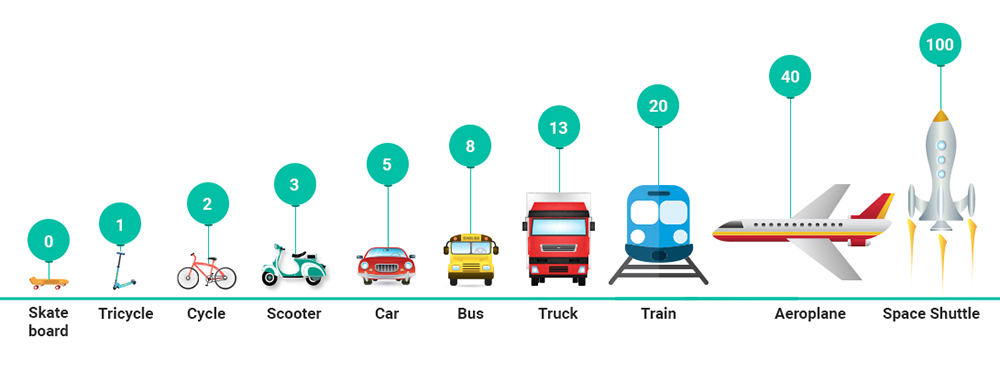
Some customers may be reluctant to engage in Time & Material mode (given the relative uncertainty of the actual outcome for the client), and can not really commit on defining the strong and detailed enough requirements that are needed as an input to a Fixed Price engagement. However, they would still like to tie their spendings with the business value they get from the supplier.
In order to manage these demand and constraints, OSB came up with an innovative engagement model that will address both (from the client perspective):
- a flexible approach to scope and requirements management
- a decoupling of the value delivered from the effort spent
This model combines both an Agile spin (for the scope and requirements management part) and a strong pricing commitment from OSB towards the customer. We call it the Story Point Model.
Our commitment to the client under this model is 3-fold:
- Focus on Business Value delivered instead of effort spent
- Fully embrace DevOps platform & paradigm
- Evangelize the Agile Model for better Business traction


Under this model, the requirements are managed in the form of Epics, Features and User Stories in a backlog, and User Stories are estimated in Story Points.
Note: The requirements gathering, documentation and estimation is typically done in T&M prior to the actual engagement, as this phase is really dependent on the client input.
The Story Point has a Fixed Price value, which accounts for all underlying aspects of the delivery process (development, unit testing, code review, functional testing, etc...) and typical team composition (Success Manager, Architect, Developer...). The Fixed Price value of the Story Point is defined contractually with the client.
Then, from the client perspective:
- The Unit of Measure (UoM) is the Story Point:
- Metric of the Business Value delivered
- Fixed Price per Story Point commitment, fully inclusive
- Costs over a given period are then directly linked to the Business Value delivered in that period
This model is in essence a Fixed Price commitment (on smaller pieces of scope) - hence all typical challenges and risks of a Fixed Price engagement apply.
| Dimension | Description / Impact |
|---|---|
| Control of the activities | In this mode, OSB is managing the resources and activities, including tasks allocation and priorities. An OSB Success Manager is allocated to the project when relevant. |
| Pricing Model | Based on the number of estimated Story Points the project price is calculated. Once it has been approved, the project budget is fixed and OSB will only be paid the contracted amount, regardless of the actual effort spent - unless change requests are negotiated and approved in the form of new User Stories. |
| Budget Management | Prior to the start of the engagement, the Epics / Features / User Stories describing the scope are captured and documented, including clear and unambiguous acceptance criteria.The team composition is validated according to customer context and requirements complexity. The budget is then calculated (see above) and validated with the client. Along project execution, actual efforts spendings + remaining estimated efforts are monitored to measure project health and profitability. |
| Scope Management | Since the budget is fixed, it is critical to ensure that any deviation (functional, technical or other) from the initial scope is immediately raised. Potential change requests will be defined as new User Stories, estimated in Story Points. |
| Timeframe | A high-level project plan is established and negotiated with the client at the beginning of the project, depending on resources allocation and availabilities (on both sides). A typical duration for such engagements is ranging from a few weeks to a couple of months. |
| Reporting | A regular reporting of the team achievements, number of Story Points delivered, etc... is provided to the client, e.g. on a weekly basis. |
| Invoicing | Invoices are issued on the basis of the number of Story Points ordered by the client, multiplied by the Fixed Price of the Story Point. |