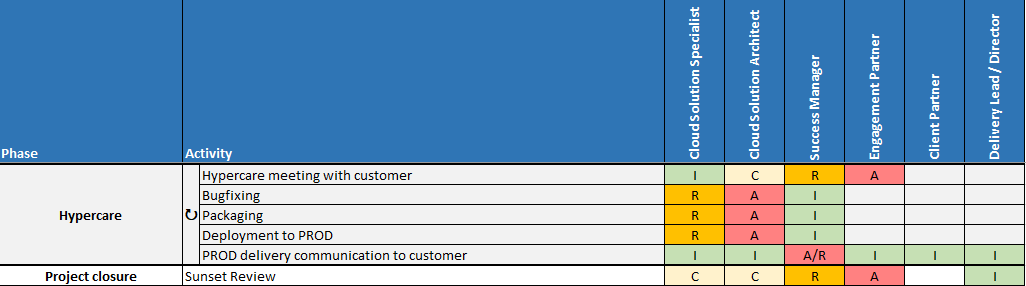
Roles and Responsibilities
During the delivery lifecycle it is key that all team members have the same understanding on who does what and when so
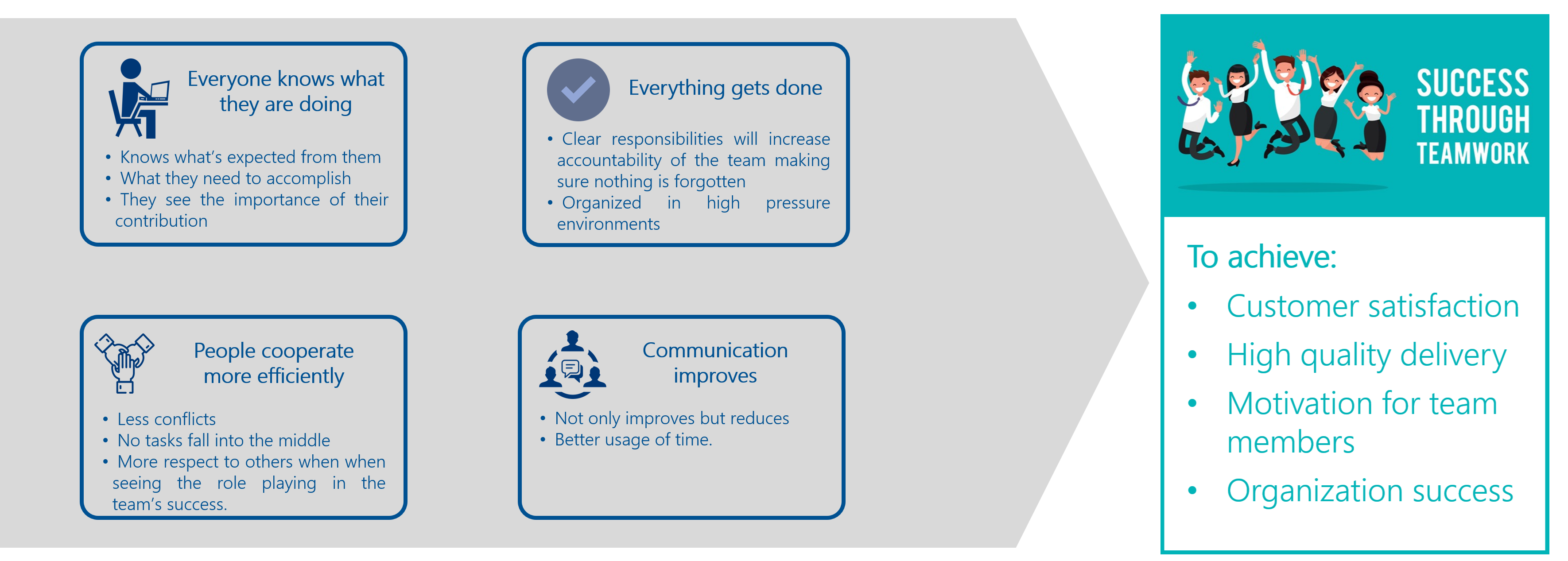
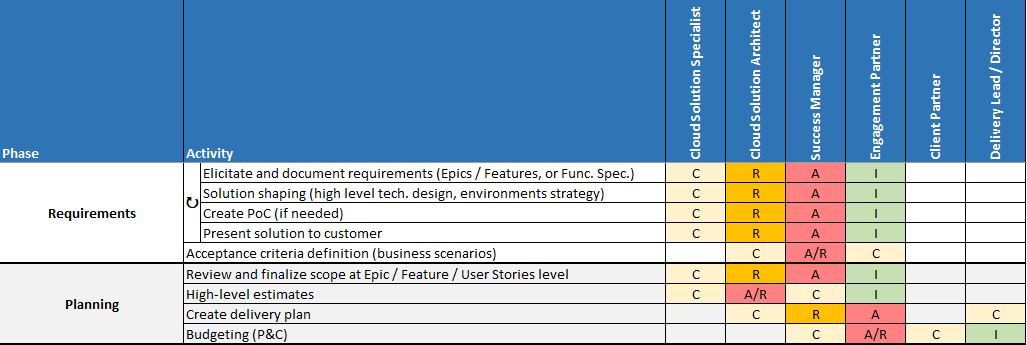
Roles and responsibilities are defined in RACI Matrix which covers the end to end process of the delivery.
Note
To see the various roles considered in OSB delivery, click here
Note
To see what RACI Matrix is about, click here.
Delivery lifecycle
OSB Delivery lifecycle relies on Agile principles which is a flexible, iterative approach that prioritizes collaboration, rapid prototyping, and continuous improvement.
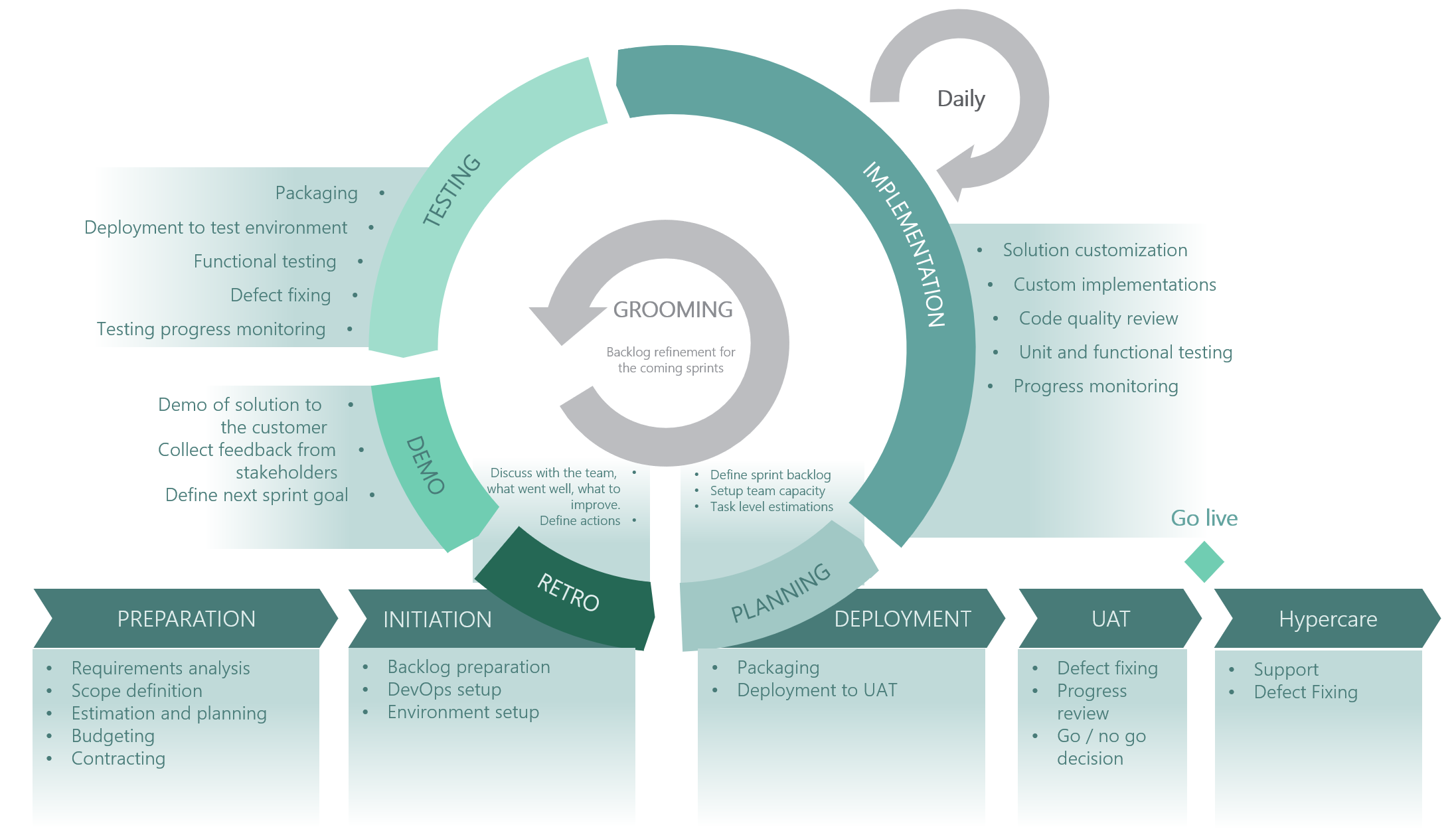 In order to maximize efficiency and productivity the clarity on roles and responsibilities in every phase of the lifecycle is essential.
Preparation
In the preparation phase we are gathering all inputs, design the solution, estimate and plan the delivery.
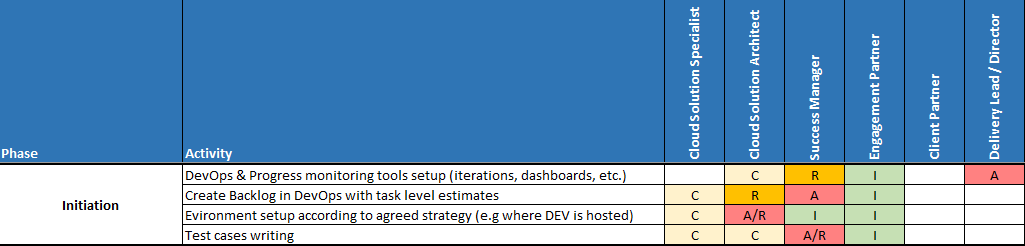
Initiation
The main objective of the initiation phase is to make everything ready for the implementation.
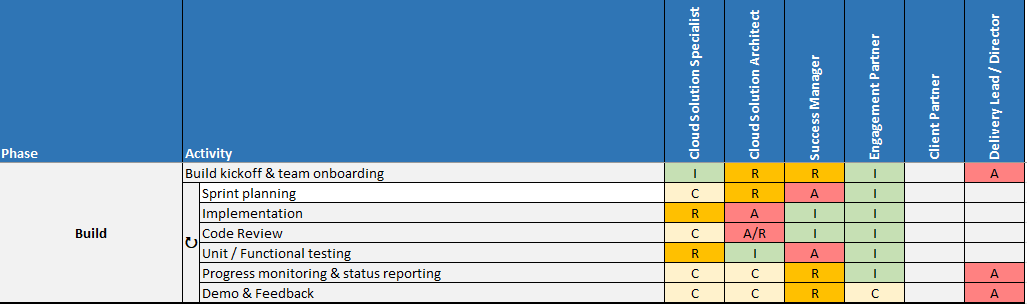
Build
In this phase the scope elements (product backlog items) are implemented and tested.
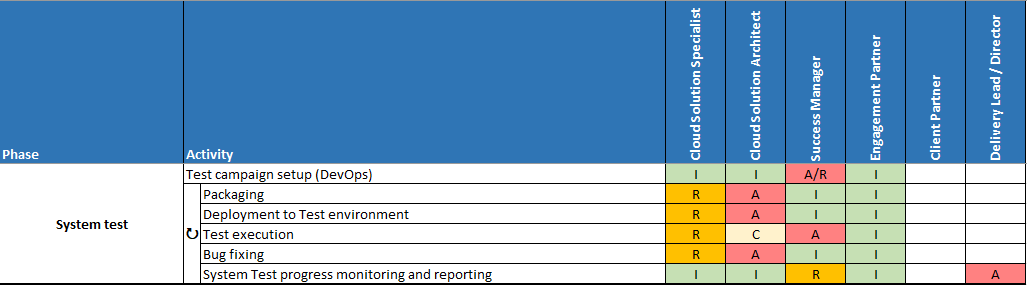
System Test
Depending on the delivery model / application the system test can be performed differently:
1. Per User Story
- Once a user story is implemented, it's deployed to the test environment where the functional validation is performed.
- To be used when the user stories are independent, and the risk of regression is marginal
- Before UAT a sanity check needs to be performed in order to ensure that there are no regression issues.
2. Per Sprint
- At the end of the sprint a testing campaign is organized
- To be used when the user stories are not independent and there is a delivery to the customer after every sprint.
- Before UAT a sanity check needs to be performed in order to ensure that there are no regression issues.
3. Per Release
- Happens before UAT in order to ensure the functional quality.
- To be used when application can be tested only when all features are implemented and there is only one delivery to the customer which is the UAT version.
- take place at the end of the build phase (after few sprints) or within every sprint
In case of functionally very complex projects the combination of the 1st and 3rd option can be considered which may increase the testing effort but guarantees the quality and reduces the fixing effort of UAT.
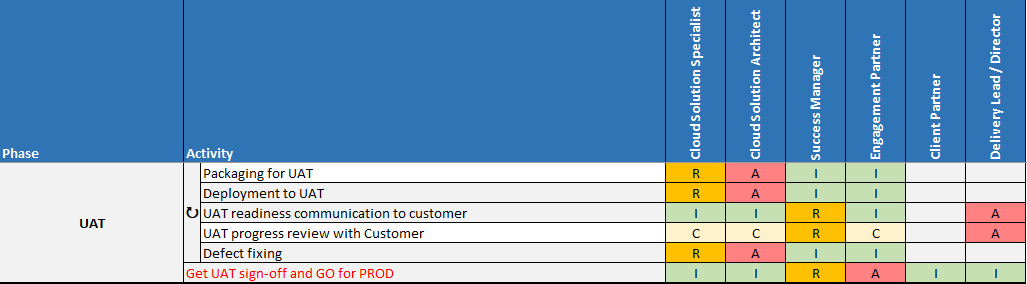
UAT
The objective of this phase is to ensure that the application is ready for go live. The customer performs the testing and opening bug reports if there are discrepancies in the application vs the requirements.
During UAT several packages can be deployed based on the testing / fixing progress.
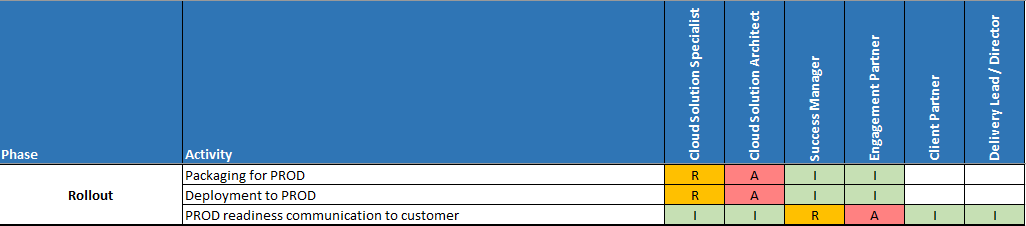
Rollout
During rollout the solution is deployed to Production.
Hypercare
The main objective of this phase is to ensure that after the prod deployment the solution is running smoothly. In case of issues immediate support is provided and hotfix packages might be delivered.
After the hypercare period the solution is handed over to support.